
No Deposit Bonus Casinos: Compare Offers Before You Play










A no deposit bonus hands a player something to play with before any money has gone in, and the same clauses state how much of a win may ever leave the account. The second half is where a no deposit bonus in Canada catches out anyone who has read only the first. The ceiling is published ahead of the claim. It is often modest beside the sums a long run of rounds can throw up, and it settles what the exercise can be worth once every other condition has been met. Somebody who takes one promotion at a time, finishes it across a weekend and only then looks at another has a plain reason to read that figure early: it describes the size of what a few evenings are going into. The rest of the terms explain how value gathers in the account, from the condition over the balance to the title the rounds sit on. The ceiling explains how much of it comes back out.
What you get from a no deposit bonus and what stays restricted
What this kind of promotion gives is play that costs the holder nothing at the point of claiming. An account at zero can hold it, no transfer has to clear first, and the value credited is real enough to generate winnings. What it withholds is the freedom that cash would carry. The credited value belongs to the promotion rather than to the player, it answers to a condition written before the claim, and it cannot be requested until that condition is discharged. The restriction is published rather than discovered, and both halves of the arrangement arrive together, which is the one mercy in it.
The award itself comes in two documented shapes. One is a set of rounds attached to a title the operator picks, the other a sum of promotional credit placed in the account. Either way the shape is only the opening fact. What decides the value of the offer is the clause set wrapped around it: the condition laid over the balance, the limit on what a request may carry, the window the terms allow, and in some cases a string to enter when the claim is made. Two offers announcing the same award can therefore run on terms with almost nothing in common.
For a player who finishes one offer before opening the next, that split between what is given and what is withheld has a practical use. The given side is easy to read off a promotional page, since the round count and the game sit in large type. The withheld side waits inside the document. Reading both before the claim costs nothing but the time it takes to find the terms, and it is the only way to know what the promotion is actually offering. What a promotional page shows and what a document says are two different readings of one offer, and only one of them binds anybody.
How does a withdrawal cap limit a no deposit bonus?
A cap tells a player exactly how far a request can go once promotional value has turned into money they can ask for. That is what it gives: a figure, published in advance, that nobody has to guess at. What it withholds is everything above itself. Value sitting over the limit does not wait in the account for a later attempt, and the terms do not treat the excess as a second request. Someone who reads the figure before claiming knows the ceiling on the whole exercise, and someone who finds it after a good run learns the same thing too late to act on it. That makes it the clause worth locating first.
The form the cap takes differs across the ten offers compared further down. Five publish a fixed cash amount. Two express the limit as a multiple of the bonus, which is a unit of a different kind and is left exactly as the document writes it. Three publish nothing under the heading, and that silence reports the state of the record rather than the absence of a limit at those brands. A multiple is never turned into cash here, because nothing in the material supplies the sum underneath it, and a cash figure is never ranged beside a multiple as though one measure covered both.
A cap also sits apart from the wagering figure, even where both appear in the same document. One governs how much play the terms want; the other governs how much money may leave afterwards. Multiplying one by the other produces a number that answers no question the terms ask. What a ceiling governs is the exit, and the quantities on either side of it are measured in units of their own. Set a balance beside a published limit and the two stay separate: one describes what an account holds at that moment, the other what a request may carry. The gap between them is not a loss or a forfeit, but the part of a balance the terms never promised to pay. Both figures below are invented.
| Item | Amount |
|---|---|
| Balance held | CAD 455 |
| Published ceiling | CAD 120 |
When bonus winnings become withdrawable and when checks apply
Conversion is the moment the terms stop treating a balance as promotional and start treating it as money. Before it, the figure on the account is real as a quantity but restricted as a holding, and no request can be made against it. After it, the cap applies, the payment clauses apply, and whatever checks the operator runs apply. The terms place that change at a single point instead of spreading it across a stretch of play, and an account shows no outward sign of it in advance.
Documents differ on what crosses over. Under one arrangement the credited sum travels with whatever the rounds produced. Under another the operator reclaims the credited sum as conversion happens and only the winnings continue. Which arrangement governs is printed with the individual offer, so satisfying a condition can finish with two quite different results depending on the wording. Some operators’ terms also carry a condition asking for a deposit ahead of a first payout; nothing here calls that typical, no brand in the comparison is named for it, and where it applies the clause is that document’s own.
Identity checks run on their own schedule, and the schedule is not the same everywhere in the market. According to the operator and to the framework it works inside, a check may land when an account is opened, at the point a bonus is activated, at a deposit, at a payout, or whenever something prompts a closer look. It is not the case, under these terms, that verification always waits for a first withdrawal.
What a check gives a player is a settled account: once it is complete, that particular question stops standing between them and a request. What it withholds is control of the timing. The operator decides when to run it and what to ask for, and the specific documents wanted sit outside anything recorded here, so no list of them is offered.
For somebody running a single offer to its end, the useful consequence is that a check is worth clearing early rather than at the point of asking for money. An unfinished one does not usually end a promotion. It holds the payout, which is a different outcome with a different remedy, and the remedy is almost always a matter of supplying what the operator asked for rather than of anything to do with the bonus itself.
Which game categories contribute to wagering requirements?
Play reduces a requirement at a rate the terms set per category of game, and the rate is where the two sides of this clause show up. What a category gives is progress: every stake placed on it moves the outstanding total down by some proportion. What many categories withhold is the rest of that proportion, since a stake and the amount recorded against the requirement are rarely the same number. Slot play commonly registers whole. Table and live products frequently register in part, and some categories are kept out of the calculation altogether.
- A category recorded at the full rate moves the total down by the amount staked, which makes the published requirement and the volume of play needed to clear it one and the same size, with no distance between them.
- A category recorded at a partial rate moves the total down by a share of each stake only, so clearing the same published requirement takes a good deal more turnover than its figure suggests.
- A category excluded outright moves the total down by nothing whatever, however long an evening of it runs and however much money passes through the account in the process.
- A category the terms leave unmentioned is a question for the operator rather than an assumption either way, since nothing in a rate table can be read backwards out of a silence that may be deliberate.
Rates themselves are undocumented across every brand in the pool behind this page, which means the governing rate for any of these offers is inside that operator’s own wording and nowhere else. The arithmetic, though, is the same wherever the rate is published: CAD 190 staked on a category contributing 25 per cent records CAD 47.50 toward the requirement, on an invented figure that belongs to no brand. A player who assumed the full amount had registered would be reading their progress as four times what the terms credited.
How wagering requirements are calculated on a no deposit bonus
A requirement starts from an amount the terms nominate, and the nomination is the operator’s to make. Some documents point at the promotional sum credited to the account. Some point at whatever the rounds returned. Some point at a figure defined inside the document and explained nowhere else in it. What a nominated amount gives is a fixed starting point; what it withholds is any way of working backwards, because no figure elsewhere in the terms reveals which amount was chosen. A reader who has located the multiple but not the amount beneath it has found the clause rather than the quantity.
Over that amount sits a multiple. Nine of the ten offers set out below publish one as a figure, and those figures span 3x to 50x across the set, while one publishes a condition in words instead. That written condition is carried here exactly as the operator wrote it and is kept off the numeric scale, since the document gives no number for it, and an invented one would report something nobody published. A multiple taken on its own describes how a requirement is built rather than how large it finally grows, and a page carrying nothing else has said less than it appears to have said.
The two together produce the turnover the terms want before conversion. A bonus balance of CAD 72 with a stated multiplier of 22 produces CAD 1,584 of required turnover, on invented inputs attached to no brand. Change either input and the product moves with it, which is why two offers advertising the same multiple can ask for volumes of play nowhere near each other. The figure in large type beside a promotion is therefore half a clause, and the half that is missing is usually further into the document, in wording nobody sets in large type.
A maximum bet clause works alongside all of that without touching the total. Where the terms carry one, it limits the size of each individual wager while the condition stays open, so what it governs is the pace at which turnover can be built rather than the amount of turnover wanted. None of the ten offers below documents such a figure, which places any limit of the kind inside that operator’s own wording. What a document attaches to a bet above the limit varies: in some the wager forfeits its contribution, in others a wider consequence sits in a clause of its own, so the drafting matters as much as the figure.
How many free spins can a no deposit bonus include
The round count is the number a promotional page leads with, and across the ten offers below it takes three values. What a count gives is the quantity of play credited: that many turns on the nominated title, paid for by the operator. What it withholds is any indication of scale elsewhere in the offer, because nothing in the figure predicts the condition, the amount behind a round or the limit at the payout end. Those are drafted separately, and a bigger count carries no promise about any of them.
- One of the ten awards 30 rounds, which is the smallest count anywhere in the set and the only offer sitting at that level, and nothing in this article turns on its being the lowest.
- Six of the ten award 50 rounds, which makes that the common figure inside this particular set rather than any kind of standard applied across the market as a whole, where documents record counts well above and below it.
- Three of them award 100 rounds, which is the largest count documented anywhere in the set, and a position in the comparison further down owes nothing whatever to a brand happening to carry it.
A player who runs one offer at a time feels the count mainly as duration of attention rather than as value. A hundred rounds takes longer to play through than thirty, and no figure here is turned into minutes or sessions, since nothing in the material supports that conversion. What the count does settle is how much promotional play arrives before the condition takes over. After the rounds are spent, the contribution wording and the nominated amount decide what the remaining balance has to do, and those clauses never mention the count at all.
Which game and developer are linked to the free spins
Rounds credited by a promotion of this kind are rarely free to roam the catalogue at will. Eight of the ten offers below name a single title and hold the rounds there, one documents a choice of six titles, and one records no title whatever. What an assignment gives a player is certainty about where the play happens. What it withholds is the catalogue: while the rounds carry promotional status, the terms do not let them move to a game the holder would rather play, however large the selection around it is. For somebody who plays one offer through to its end, that is the clause most likely to shape the evenings it takes.
Studio credits behave the same way. Five of the ten name a single developer for the assigned game, one documents several studios across the titles it offers, and four record no credit at all. A credit identifies whoever built the game and reports nothing further. It carries no indication of behaviour, return to player, volatility, hit frequency, suitability under a wagering condition, quality or promotional worth, and none of that is inferred from a title either. Pragmatic Play is credited at two of the five, which is a fact about two documents and settles nothing about either promotion, their terms or any connection between them.
| How the terms record it | What that means for the reader |
|---|---|
| A single named title or a single credited studio | The field is settled in the document, and the rounds or the credit attach to exactly what is named |
| A documented choice of several titles or several studios | The terms set out the permitted range, and the choice runs across what they name and no further |
| Nothing documented | The record holds no entry, nothing is read into the gap, and only the operator’s own wording closes it |
The three states stay separate throughout, because collapsing them produces a claim the material does not carry. A documented choice of six titles is not one assigned title with latitude. Four absent studio credits are not four studios that merely went unnamed. And an offer with no recorded title is not an offer that lets a player use any game in the catalogue; it is an offer whose assigned game the corpus does not document, and the operator’s own page is the only place that gap closes.
How much is one free spin worth?
A unit value is the amount a casino places behind a single promotional round. What it gives is the one figure that turns a round count into a quantity of money staked. Seven of the ten offers below publish it, and the amounts recorded are CAD 0.38 at one brand, CAD 0.30 at three of them and CAD 0.15 at three more. Three publish nothing, which leaves what a single play commits outside the document at those brands and unobtainable from any other field in it. What a unit value withholds is a prediction: it describes the stake behind a round rather than what the round returns, and multiplying it by a count produces a figure of the first kind only:
65 rounds at CAD 0.35 each give a gross stake value of CAD 22.75, on invented figures attached to no brand.
That product is an amount staked for the player by the operator. It is neither winnings nor money received, and neither a return nor an expected value, so it is never placed beside a withdrawal ceiling as though the two measured one thing. A player setting a gross stake value against a cap would be comparing a quantity of play with a limit on payment, which are different units answering different questions. For somebody working through one offer at a time, the useful reading is narrower than it looks: the figure says what an operator has committed to the rounds, and says nothing whatever about what any of those rounds will give back over the course of an evening or a weekend.
How promo codes work on no deposit bonus offers
A code is a string the operator publishes alongside an offer. What entering that string gives the account is attachment: the account is marked as having claimed that particular promotion, and the promotion’s terms begin to apply to it. What the string withholds is any influence over those terms. The multiple, the nominated amount, the assigned title, the cap and the eligibility wording are all drafted elsewhere in the document and bind every account that holds the offer in the same way, entered string or not.
Where a code exists, the terms usually state two things about it. The first is where it goes, which may be a field in the registration form itself or a section inside the promotional pages of an account that is already open and in use. The second is when it goes there, since a string wanted at registration and a string wanted at activation are not interchangeable. Where a code of that kind exists and is never entered, the promotion may simply never attach, and nothing in an account would necessarily show that anything had been missed.
Six of the ten offers below document a code. Four record none, and that statement covers the record and stretches no further. It does not establish that a code is dispensable, that entry steps are absent at those brands, or that the award credits or activates itself when an account is opened. A brand with no recorded code is a brand whose code the material does not document, and only that operator’s own page settles the question either way, which makes it the one place worth checking before a claim.
Different forms of no deposit bonus offers
Free spins tied to one named game
The commonest shape credits a run of rounds and ties them to a title the terms specify. What the shape gives is play that begins at once: the rounds arrive in a defined quantity, each carries a stake the operator covers, and nothing has to be funded first. What it withholds is choice over where they go, since the assignment holds the rounds on one game while promotional status lasts. Whatever the rounds return becomes a balance governed by the condition in the document, which is where the shape stops being about a game and starts being about a clause set. Both halves are published with the offer, and the second is what a player meets once the rounds have gone.
Promotional credit added to the account
The second shape credits a sum rather than rounds. What that gives is latitude the first shape does not: no single title holds the value, so play can spread across whatever the terms permit, and a player who dislikes the game in a rounds-based offer is not stuck with it. What it withholds is the simplicity of a counted award, because a credited sum is governed from the moment it lands by the nominated amount and the multiple over it. The sum is kept apart from any cash the account later holds, and a document crediting value this way usually explains what happens to the promotional part at conversion. Nothing about the size of the sum follows from the shape alone.
Casino promotions that start with a deposit
The third group sits outside the subject here, separated by what a player has to do before anything is credited. A deposit-matched promotion is scaled against money already transferred, so it cannot exist until a payment settles. A cashback-style promotion returns a share of losses taken inside a stated period, which means both play and money come first and the award is worked out from a record. A loyalty-style promotion accumulates from activity over time, so an account history has to exist before value appears. What all three give is a larger award built on the player’s own money or play. What they withhold is the one feature the offers compared below share: a start that asks for nothing.
How the ten offers were compared
Rows are grouped by the form in which each offer publishes its withdrawal ceiling — a fixed cash amount first, then a ceiling given as a multiple of the bonus, then brands publishing none — with casino names alphabetical within each group. The grouping sorts documents by how they write one condition and carries no judgment, so nothing recommends the first row over the last one. Where a field has nothing documented, the cell says so rather than being filled in.
- The casino, named as the operator publishes it, with no brand given a position for any reason beyond the group its ceiling form puts it in and the alphabet inside that group, which is the whole of the sorting.
- The number of free spins credited by the offer, recorded in the single unit every document in the set uses and left exactly as those terms state it, with no rounding and no banding applied to it here.
- The assigned game and the studio credited for it, each carried in whichever of the three documented states that brand’s own terms produce, with the three states kept apart in the wording as well as in the cell itself.
- The withdrawal ceiling and the promo code, the first in whichever form its document publishes and the second exactly as the string is written, or marked as undocumented wherever the record holds no entry for that brand at all.
Who can qualify for a no deposit bonus and how to claim it
Eligibility comes to whatever the wording published with an individual offer declares, and that wording is where both sides of the question live. What a set of terms gives is a defined population: a new account, one claim for each person, sometimes one for each household or shared address, sometimes a named list of territories that are admitted. What it withholds is anything beyond what it states. An absent household clause is no licence for a second account at one address, and an absent provincial clause is not coverage everywhere. Both sides of that are readable before anything is claimed, which is the reason the wording repays the few minutes it takes.
Age is the single condition settled away from the operator, and each province and territory settles it on its own rather than the country doing so collectively. Beyond that, where a player happens to be does not by itself decide what they may claim, since availability depends on each offer’s own terms and on the framework an operator sits inside. Where provincial restrictions are documented, they bind; where none is documented, nothing is asserted in either direction, and a player’s own location is never turned into a rule covering the country. The table pairs what the terms may ask for before a claim with what they govern once the value is credited.
| Before claiming | After crediting |
|---|---|
| An account that exists and matches the holder’s own particulars | An account whose particulars still match, since a later correction can hold a payout |
| Eligibility under the published wording for that one offer | Eligibility unchanged by the crediting, which confirms attachment rather than qualification |
| The code where the terms publish one, entered where and when they say | Nothing further owed to the string, which has done its whole job at the claim |
| The rounds or the sum present in the account before play begins | The condition over the balance, running against whatever that play returns |
| Nothing yet, since no payout is possible before conversion | The cap, the payment clauses and whichever checks the operator runs |
None of this depends on the device the account is reached through. A claim made on a phone and the same claim made on a desktop come to one thing, because the conditions fasten to an account rather than to whatever is displaying it, and no screen behaviour is described here. What the two columns are really separating is a question of timing and of order: the left side can be settled in advance by reading, while the right side only resolves through play. For a player working one offer at a time, settling the left side properly is what keeps the right side from producing surprises, and the left side of it costs nothing beyond the few minutes of reading it actually takes to settle.
How payments and withdrawals work at Canadian casinos
Two different parties decide how money moves at a casino, and the division is worth keeping straight. What the player decides is which method to use from whatever the operator offers. The families documented for this market are Interac e-Transfer and Interac debit, iDebit and Instadebit, cards, e-wallets, cryptocurrency and prepaid methods. Which of them appears at a given site is not fixed across the country: availability differs between a provincially conducted and managed platform, an operator holding Ontario registration, an operator holding Alberta registration and an offshore site, and no method is attributed to any casino named in this article. What a player controls is the choice among whatever that particular site lists.
What the operator’s terms decide is narrower but more consequential. They decide which of the player’s choices is allowed to carry money back out. A document may require a withdrawal to return by the route a deposit arrived through, which raises an obvious question on an account that has never been funded, and only that operator’s wording resolves it. What the terms give is certainty about the route; what they withhold is the freedom to pick another one at the point of asking for money.
The same split governs timing. A player decides when to submit a request. The operator, the method and whatever the document’s clauses say decide what happens between that request and the money, so no timeline is put forward here, and no fee is quoted. What can be said is which factors a timeline follows from, and the category of promotion is not among them.
For an account funded entirely by a promotion, the payment clauses are worth locating before the claim rather than after conversion. Nothing earlier in the process gives a player a reason to look at them, and they are the clauses that decide whether a win reaches a bank account or waits on a condition nobody read. Neither party’s half of the decision is visible from the promotional page.
Comparison of 10 no deposit bonus offers
Ten offers follow, each described only from the fields its own document holds. Six brands credit fifty rounds, three a hundred and one thirty. Five publish a cash ceiling, two give the limit as a bonus multiple, and three publish nothing under that heading. Six document a code and four record none. Seven document the amount behind one round and three do not. Eight name a single title, one documents a choice of six and one names none, while five credit a single studio, one documents several and four credit none. Every figure stands as its own document holds it, and an absent field is reported absent rather than filled in.
GGbet: CAD 15 withdrawal cap with 50 free spins
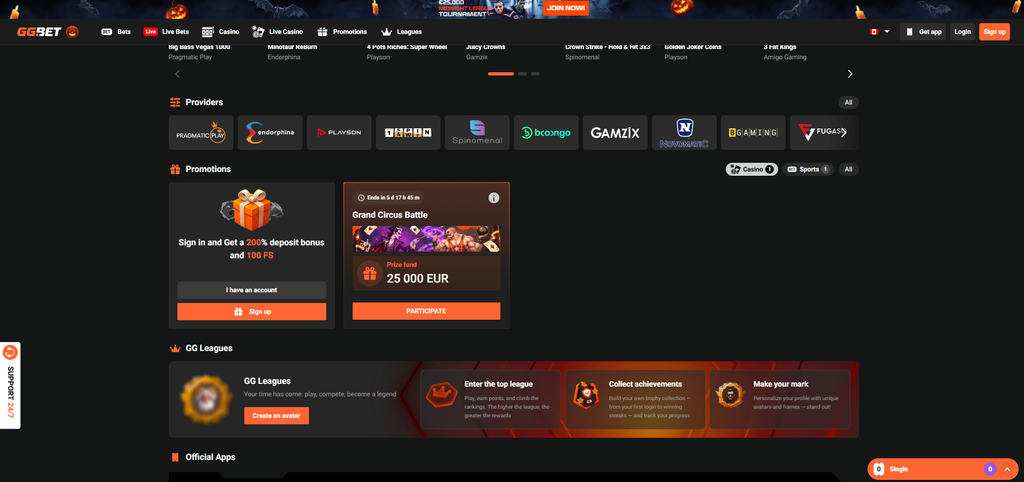
Fifty rounds are credited and CAD 15 is the published ceiling over a request. The count gives the volume of promotional play; the ceiling withholds whatever a win reaches above that figure, and neither of them was drafted against the other. Sweet Bonanza is the assigned title, Pragmatic Play is the credited studio, the stated figure is 30x, each round carries CAD 0.30, and JOKERFS45 is the published string. No validity window appears in the terms covering this offer, so how long the rounds stay live is a question for that document.
HitNSpin: Big Bass Splash with CAD 0.15 free spins
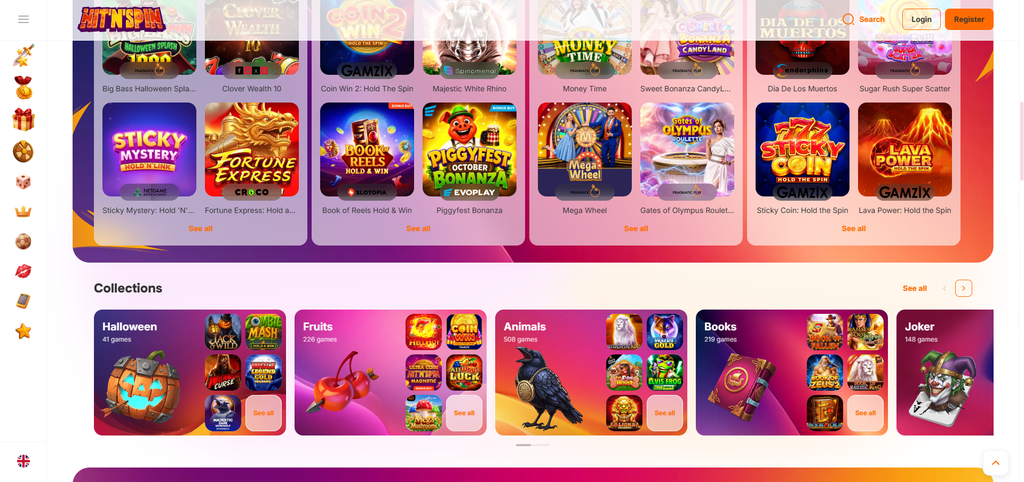
Big Bass Splash is the assigned title and CAD 0.15 is the amount recorded behind each round. Fifty rounds run on that title, Pragmatic Play is the credited studio, the stated figure is 3x, CAD 15 is the published ceiling, and no string for the claim is recorded. What the title gives is a fixed place for the play; what the unit value gives is the stake behind each turn, and neither reveals the other. No contribution rate is stated for any category of game here, leaving that rate inside the operator’s wording.
IceCasino: Book of Fallen free spins with a CAD 38 cap
Book of Fallen holds the rounds and CAD 38 is the ceiling published over a request. The title settles where fifty rounds of promotional play happen; the ceiling settles how much of a result can leave, and withholds the remainder without reserving it. Playson is the credited studio, the stated figure is 3x, each of the rounds carries CAD 0.30, and no promo code appears in the material behind this offer. Nothing in these terms states a maximum bet while the condition is open, so any such limit lives in the operator’s own document.
magic365: CAD 8 cap with CAD 0.30 free spins
Each round carries CAD 0.30 and CAD 8 is the ceiling published over a request. Thirty rounds are credited, Panda Fortune Rush is the assigned title, the stated figure is 45x, no studio is credited in the material and no promo code is recorded for the claim. Both figures in the heading are documented, and they measure unlike things: one a nominal amount staked for the player on a single turn, the other a limit on a withdrawal. Neither the base the figure applies to nor a validity window is stated here.
RollXO: CAD 75 withdrawal cap with promo code LUXE50
The string published for the claim is LUXE50, and CAD 75 is the ceiling over a request. The string attaches the account to this promotion and governs nothing after that; the ceiling governs the exit and nothing before it. Gold Rush with Johnny Cash is the assigned title, fifty rounds are credited on it, the stated figure is 50x, and no studio is credited in the material for the game. The amount behind a single round is not recorded in these terms, which leaves the stake on one turn outside what the offer states.

Flagman: OOF the Goldmine Planet with CAD 0.15 free spins
CAD 0.15 is recorded behind each round and OOF the Goldmine Planet is the title they run on. A hundred rounds are credited, the stated figure is 45x, FSBONUS100 is the published string, the ceiling is expressed as ten times the bonus, and no studio is credited for the game. What the unit value gives is the stake behind a turn; what the assignment withholds is every other game while the rounds hold promotional status. The ceiling is left in the unit its document uses, and no cash equivalent is derived for it.
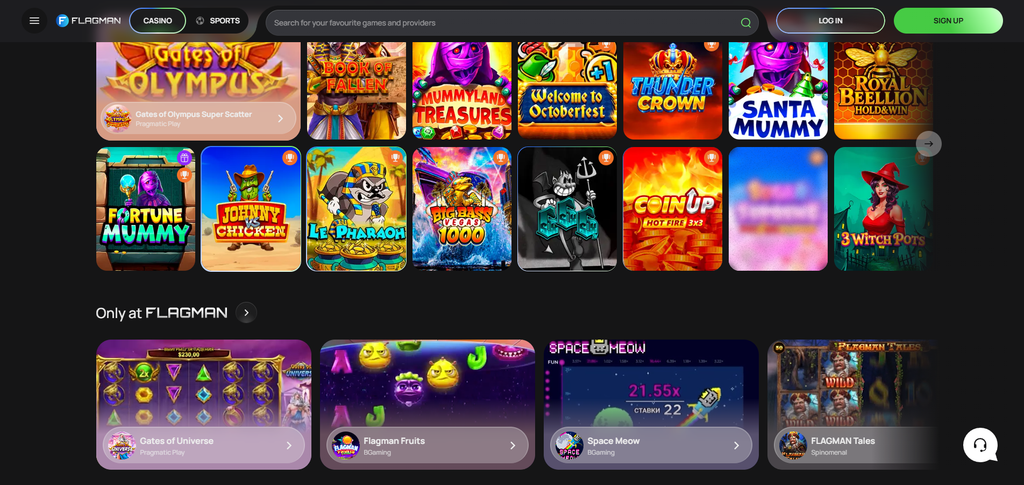
Fugu: promo code FSBONUS100 for 100 free spins
A hundred rounds are credited and FSBONUS100 is the string published for the claim. The count gives the volume of promotional play; the string gives nothing beyond attachment and leaves the rest of the clause set untouched. The stated figure is 45x, each round is recorded at CAD 0.15, the ceiling is expressed as ten times the bonus, and the material records neither an assigned title nor a credited studio for this offer. No route into the promotion beyond the published string is described in the terms, and none is supplied here.
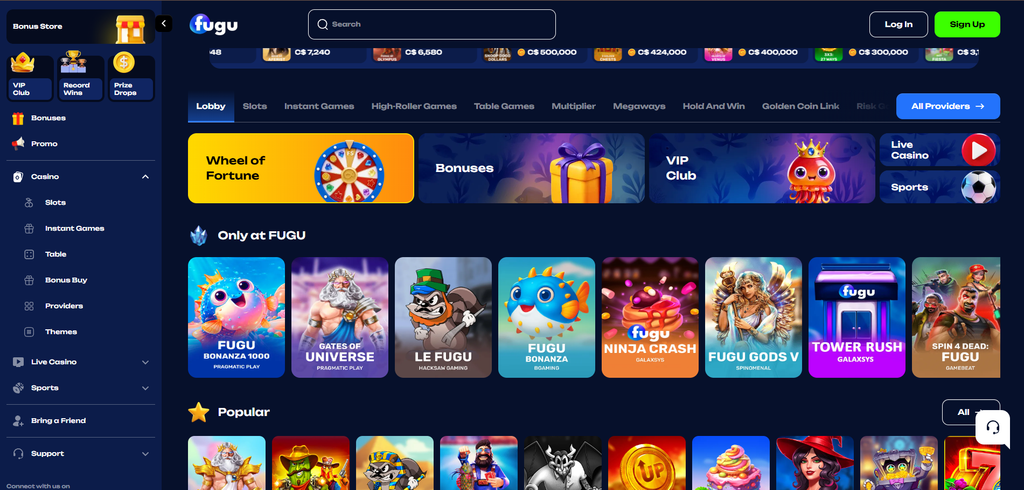
Hellspin: Booming Games slot with 50 free spins
Fifty rounds are credited and Booming Games is the studio credited for the title they run on. Lady Wolf Moon Megaways is that title, each of the rounds carries CAD 0.38, the wagering condition appears in words instead of a figure, and no ceiling over a request is recorded. The count gives the quantity of play; the credit gives a developer’s name and withholds everything else, since nothing about how a game behaves follows from who built it. The written condition is reproduced as the operator phrased it, never on a numeric scale.
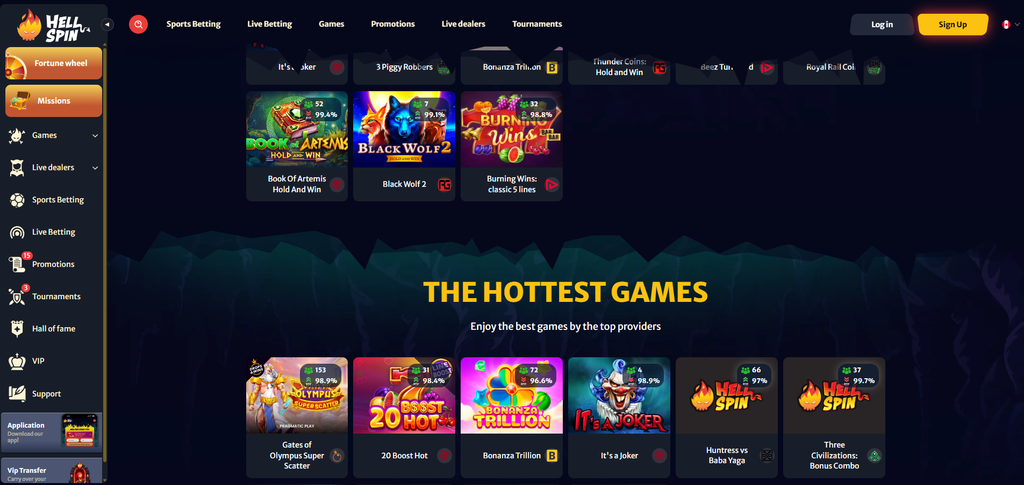
Spinmills: x50 wagering on 50 Hacksaw Gaming free spins
Hacksaw Gaming is the credited studio and 50x is the stated figure. The credit identifies who built the title and reports nothing about the promotion; the figure is the operator’s own drafting and governs how much play the terms want. Le King is the assigned title, fifty rounds are credited on it, SPM50 is the published string, and neither the stake behind one round nor a ceiling over a request is recorded. The amount the figure applies to is not stated either, so the base behind the multiple stays inside that document.

WinBeatz: x45 wagering on 100 free spins across six titles
The stated figure is 45x and the terms document a choice of six titles the rounds may run on. A hundred rounds are credited, several studios are documented across those titles, UPLAY100 is the published string, and the material records neither the amount behind one round nor a ceiling over a request. What the documented choice gives is latitude inside a named range; what it withholds is the rest of the catalogue, and it is never one assigned title. No validity window is recorded here, so that is a question for the operator’s document.
One pattern across the set is worth stating on its own account. The round count is documented at all ten brands and the wagering form at all ten, while the ceiling is documented at seven and the amount behind one round at seven. The fields that describe what a player receives are therefore recorded more consistently than the fields that describe what they can take out or what a single turn commits. That is an observation about the record and about nothing else: it is not drawn into a ranking, no document is treated as stronger for the headings it happens to fill, and no figure here is derived from another. That gap describes documents rather than promotions.
Canadian rules for online casino players
Gambling in Canada is regulated province by province and territory by territory rather than federally, which is why the rules a player is bound by and the promotions they can reach both follow where they are. What that gives a reader is a framework with a definite answer in their own jurisdiction. What it withholds is a single national rule to fall back on, so a figure or a market arrangement recorded in one province says nothing whatever about the next one. The bullets below set out the arrangements the corpus records, each of them as it stands and not one standing in for any of the others.
- The minimum age is set locally: eighteen in Alberta, Manitoba and Quebec, and nineteen in the other provinces and territories, with no countrywide figure at all and no provincial threshold standing in for the rest of them.
- The Ontario market opened on 4 April 2022, with the Alcohol and Gaming Commission of Ontario as regulator and iGaming Ontario conducting and managing the framework alongside the private operators inside it.
- The Alberta market opened on 13 July 2026, with Alberta Gaming, Liquor and Cannabis in the regulatory role and the Alberta iGaming Corporation named in the framework.
- Elsewhere, in the arrangements the corpus records, a province itself conducts and manages a platform rather than admitting operators that registered outside it.
- The Kahnawake Gaming Commission was established in 1996, its online gaming framework dates from 1999, it is based in the Mohawk Territory of Kahnawà:ke, and a permit issued there is an instrument of another kind altogether, not a provincial registration.
Ontario has rules of its own on the public advertising and promotion of bonuses, inducements and credits. They reach the advertising rather than the promotions themselves, so offers are not thereby unavailable in the province: one may still appear to a holder who has signed in, while no publicly published page carries it at all. None of it describes the position anywhere else in the country, and no verdict on the legality of any site, offshore or otherwise, is offered here.
On taxation the material records a principle rather than any arithmetic. Casual play produces winnings treated as falling outside income, whereas a business operation in the same activity is handled on another footing, and where the line between the two falls is a matter for a reader’s own circumstances rather than for a general rule. Nothing in this article is tax advice or legal advice, and no figure, threshold or filing consequence is stated.
How long can a no deposit bonus stay active?
A validity window is the period over which an offer stays live, together with every condition attached to it. What a window gives a player is a deadline they can work to: the terms usually state both how long it runs and the event the count starts from, which may be the claim, the crediting or something else the document names. What it withholds is any flexibility once it closes. Rounds left unplayed, a condition left unsatisfied and promotional value still held when the window shuts are dealt with by the same clause, and the remedy, if the clause provides one at all, is whatever it says it is.
No window of that kind is recorded for any of the thirty brands in the pool behind this page. That absence belongs to the material rather than to the offers: no figure could be taken down, which is a long way from a claim that these offers never lapse or run without a window. No duration is suggested anywhere here, because an invented one would report something that no operator has published. For a player who finishes one offer before starting another, the window is the term most worth finding in the document, since a deadline nobody read is the one condition that cannot be fixed after the fact. Most other terms in an offer can still be satisfied late; a closed window cannot be reopened by satisfying anything at all.
What can end an offer and when support can help
An offer can end having produced nothing at all, and the causes for that are written into individual documents rather than applying anywhere across the market. What a cancellation clause gives a player is advance notice of the conduct that ends a promotion; what it withholds is any guarantee that another operator drafted the same list. Each cause below appears in some operators’ terms and in no others, and none of it is attached to a brand named in this article or treated as a market-wide rule.
Conditions that may end an offer before payout
The causes recorded in the pool behind this page fall into a few recognisable kinds. A bet above a published maximum while the condition remains open may cost it its contribution or trigger a wider consequence elsewhere. Play on a title the offer rules out has an effect depending entirely on how that exclusion was drafted. A window closing with rounds unplayed or a condition unsatisfied is dealt with by the validity clause itself. A second promotion running at once leaves it unsettled which offer a wager counts toward, which some terms resolve by ending one of them.
What the account record may show
A record of play and bonus progress sets out what has happened on an account against what the condition still demands. In principle it holds promotional value apart from cash, records each credit with its date, and reads the turnover outstanding. Whether a reading of that kind appears at all is the operator’s to decide, and where nothing appears the terms as written are all a reader has. No claim is made here about where that material is held or what an operator calls it, and a figure on a record reports a holding rather than an entitlement to withdraw it.
Which questions casino support can answer
Support is useful for the questions a document cannot answer, which are the ones about that particular account. Whether an offer is actually open to it, where the condition currently stands, what a pending request is waiting on: those are matters of fact nobody else can confirm. What a published document already settles — the multiple, the ceiling, the eligibility wording — is faster to read than to ask about. A question carries furthest with the claim’s date and the published string attached, and where an answer and the document disagree, the document is the written commitment worth raising.
Questions Canadian players ask about no deposit bonuses
What limits withdrawals from a no deposit bonus?
The ceiling published with the offer settles it, and five of the ten compared above give it as a cash figure.
- Two state the limit as a multiple of the bonus, three state none.
What needs to happen before bonus winnings are paid out?
The condition on the promotion has to be satisfied and the value has to cross into the payable side of the account before a request.
- Checks the operator runs can also sit between conversion and a payment.
Do all game categories contribute to wagering?
Not necessarily, since the terms set a rate for each category and a stake may register fully, partly or not at all.
- No rate of contribution appears in any of the ten documents above.
What amount is used to calculate wagering?
On an amount the terms nominate, which may be the credited sum, the proceeds of the rounds, or a figure the document defines internally.
- That amount is never worked backwards from a published multiple alone.
How many free spins are common in these offers?
Among the ten above the field holds thirty rounds at one brand, fifty at six and a hundred at three others.
- Counts recorded elsewhere in the market sit outside that range entirely.
Which game must the free spins be used on?
Eight of the ten offers above name a single title and keep the rounds on it for as long as their promotional status lasts.
- One documents a choice of six titles and one records no title.
What does the amount behind one free spin represent?
It means whatever a casino places behind a single promotional round, a measure of stake rather than of anything the round might return.
- Seven of the ten offers above publish it and three do not.
Do all no deposit bonus offers need a promo code?
That depends on the offer, and six of the ten compared above document a string while four record none at all.
- No recorded code means the record is silent, not that none exists.
How is a no deposit bonus different from a deposit bonus?
A deposit bonus is scaled against money already transferred, so it cannot be claimed at all until a payment has first settled in the account.
- These offers ask only for whatever qualification their own terms set.
Who can qualify for a no deposit bonus in Canada?
Those terms decide it, and they may require a new account, limit claims per person or household, and name admitted territories.
- Age is settled provincially, at eighteen in three provinces and nineteen elsewhere.
Can Ontario players access these offers?
These promotions sit inside the Ontario framework, which regulates the advertising of an offer rather than its availability to a signed-in account.
- An offer can be put to that holder without any public listing at all.
How long can an offer remain active after crediting?
The terms state a window and the event its count runs from, though no window is recorded for the thirty pool brands.
- No duration is suggested here, since no operator published one anywhere.
What can prevent a bonus from being credited or paid out?
A string that was never entered, a condition left unmet, a closed window or an unfinished check can each stand in the way.
- An unfinished check usually holds a payout rather than ending the offer.
Setting gambling limits and finding support in Canada
Every regulated account comes with controls the holder sets for themselves, and not one of them needs a promotion to be running. A deposit limit fixes the most the account will accept across a period the holder chooses, which caps exposure at the point money would enter rather than after it has gone. Time limits and session reminders track how long a stretch of play has run and interrupt it at a threshold set in advance, so the decision about when to stop is made before the session rather than during it. A play history keeps what actually happened instead of leaving it to recollection, which matters more than it sounds like it should for anyone who plays in short bursts and remembers the results unevenly. What all of those give a player is a decision made in advance and held to by the account rather than by willpower at the end of a session. What they withhold is nothing at all: not one of them costs anything to set up, and not one depends on a promotion being open. Self-exclusion lasts far longer than any of those and is administered differently from one province to the next, so the brands a scheme covers and the length it runs for depend on where the holder lives rather than on a single national arrangement. Help works the same way: there is no single national helpline in Canada, and the services below are each reached directly, with the national directory as the place to start when the right province is not obvious from the numbers alone.
| Service | Who it is for |
|---|---|
| Responsible Gambling Council directory | A national pointer toward the service set up in each province |
| ConnexOntario — 1-866-531-2600 | Players in Ontario, reached directly on that number |
| Gambling Support BC — 1-888-795-6111 | Players in British Columbia, reached on that number |
| Saskatchewan Problem Gambling Help Line — 1-800-306-6789 | Players in Saskatchewan, reached on that number |